In April 2026, Dr. Marije Kanis, senior researcher at the Amsterdam University of Applied Sciences, participated in CHI 2026 in Barcelona, one of the largest international conferences in the field of Human-Computer Interaction. While artificial intelligence dominated the majority of discussions at the event, Kanis focused two workshop contributions on the societal and design-related questions surrounding quantum technology.
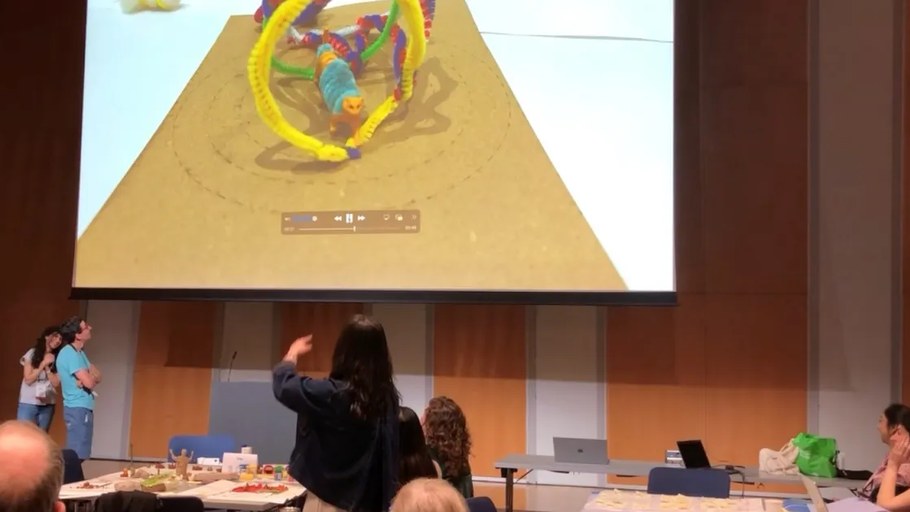
During the workshop Craft-Based Data Physicalization, Kanis and fellow participants explored how abstract concepts from quantum computing can be translated into tangible representations. Conventional data is typically represented as fixed states of zeros and ones, but quantum technology introduces notions of uncertainty, multiple simultaneous possibilities, and variable states. The explorations during the workshop produced new ways of thinking about data, including through physical objects and experimental visualisations.
In the second workshop, AI CHAOS! Challenges for Human Oversight of AI Systems, Kanis examined which insights from current discussions on AI literacy, oversight, and societal impact may be relevant for future quantum technologies. Her contribution took the form of a dialogue with ChatGPT, through which themes such as governance, human-technology interaction, and the skills required in a future shaped by both AI and quantum technology were explored.
The participation in CHI 2026 connects to ongoing research within the special professorship Applied Quantum Computing at the Amsterdam University of Applied Sciences, and to projects including Divide & Quantum and Creatief met Quantum. These research initiatives address both the technical possibilities of quantum technology and the societal, creative, and design-oriented questions that accompany them. Kanis also documented her findings in the publication *Quantum Computing as Creative Material: Opportunities and Challenges for Crafting Physical Representations of Abstract Futures*, co-authored with Marten Teitsma and Julia Cramer.