
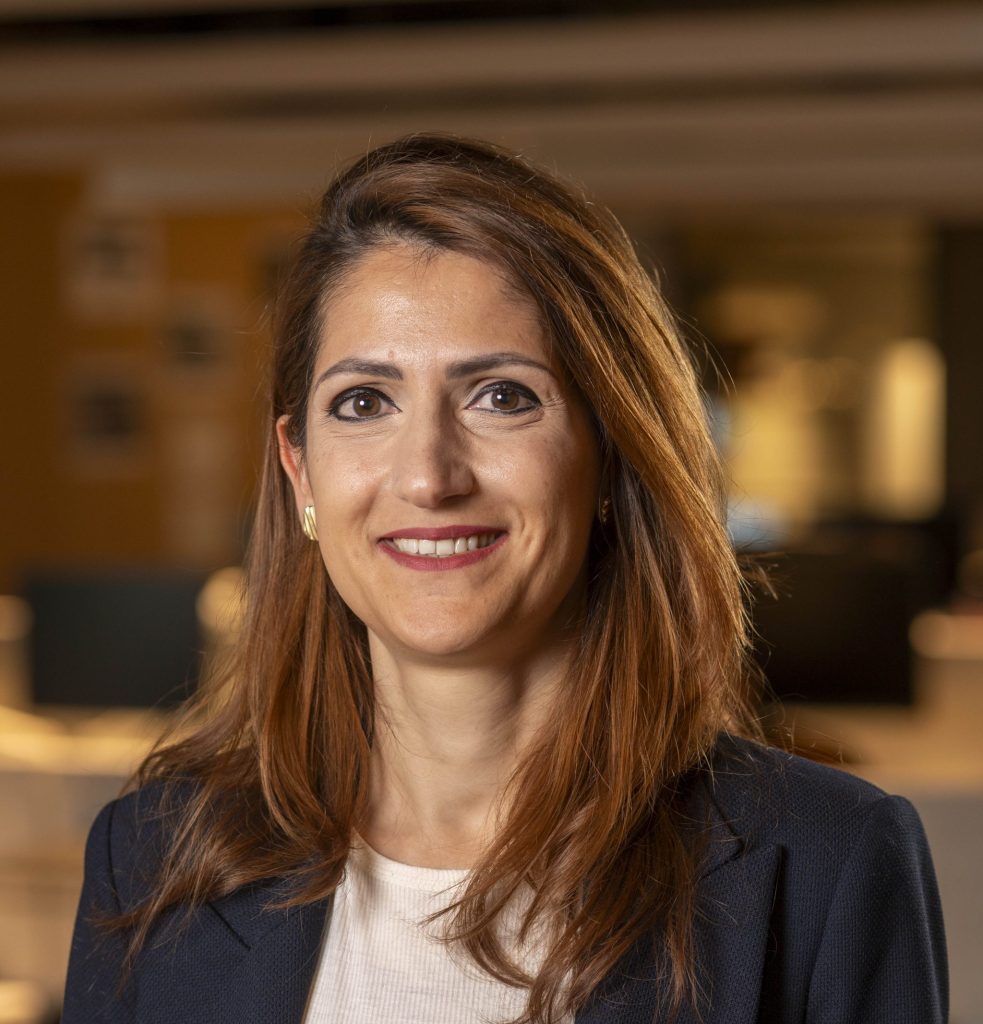
Last week, we spoke with Mona de Boer, an expert in data and Responsible AI and a partner at PwC. Mona describes herself as someone driven by a constant passion for learning, a curiosity that has been the common thread throughout her career for over twenty years. At PwC, she operates at the intersection of data, technology, and organizational challenges. Simultaneously, she remains deeply embedded in academia as a university lecturer and researcher at the University of Amsterdam. This dual role allows her not only to follow tech developments on the horizon but to directly translate them into practical, societal applications.
“Technology has always played an important role in how organizations operate,” Mona reflects on her journey. “But over the past twenty years, that impact has grown exponentially. While the initial focus was broadly on data, the last decade has completely shifted toward AI. Yet, it is no longer just about the technology itself. The key question today is how to successfully bring people along in this massive technological acceleration.”
One of the most persistent misconceptions is that AI belongs strictly to the IT or technical department. Why is that a mistake?
“AI is absolutely not the domain of a single function. If you really want to do it right, you need the entire organization. Collaboration across different disciplines is crucial. Not only technology teams, but also the business, the risk departments, and increasingly HR all play a vital role. That last one is no coincidence: AI fundamentally changes the daily reality on the work floor. It impacts how people work, how tasks are automated, and what skills are required tomorrow. It’s about breaking down those technical silos and bringing all those organizational perspectives together at the same table.”
When does an AI application transition from being just a cool piece of technology to being truly ‘meaningful’?
“Meaningful AI must first and foremost contribute to organizational goals, whether that means working more effectively or developing new services. However, organizations do not operate in a vacuum; you always need to consider what a system means for the broader ecosystem and society. What is its impact on your external stakeholders? Whether that means everyday consumers, patients in healthcare, or citizens dealing with the government. ‘Meaningful’ is the deliberate combination of internal strategic goals and external impact. And let’s be honest: AI is not the solution to every problem. Sometimes it is simply not the right technology for the challenge at hand.”
You have been in this field for a long time. What major shift are you seeing across organizations right now?
“While organizations were mainly experimenting with small proof of concepts and isolated pilots a few years ago, we are now seeing a movement toward large-scale implementation across all sectors. We are right in the middle of a transformative phase. This rapid scaling raises urgent questions about adoption and trust. Do employees actually understand what is happening under the hood? Are they placing too much trust—or perhaps too little—in the output of an AI system? And crucially, do they feel safe enough to ask critical questions when they doubt an algorithmic outcome?
In this context, I view the European AI Act as a welcome compass. While some fear that regulation will stifle innovation, I observe the opposite in daily practice: it offers organizations much-needed guidance and clear frameworks on what safe and responsible use looks like. Ultimately, it helps them stay in control of their own AI rollouts.”
Responsible AI is increasingly linked to sustainability and ESG goals. How is that taking shape?
“The connection between Responsible AI and the ESG domain (Environment, Social, Governance) is growing stronger by the day. AI models consume massive amounts of energy, so we must be critical of our footprint. At PwC, we are heavily focused on this right now. Just as we have developed ways to measure and manage the travel footprint of our employees over the years, we are now doing the same with AI. You can make very concrete choices here, such as specifically partnering with data centers that utilize circular models.
Furthermore, sustainability deeply impacts the ‘S’ of ESG: the social aspect and the protection of fundamental human rights. What does automation mean for the worker? Measuring this long-term societal impact through ‘impact audits’ is still in its infancy. We are still early in the collective AI journey, and it will take time before we can reliably audit a system’s true impact once it has been running in the wild for a while. But shifting the focus from pure tech to long-term human impact is an excellent step forward.”
You are delivering a keynote at AI020 soon. Can you give us a sneak peek of your approach?
“During the keynote, I want to take the audience through a ‘Back to the Future’ thought experiment. By intentionally traveling twenty years into the future and looking back at the present moment with hindsight, I want to sharpen our perspective. What do we hope to have known by then? And how do we hope we integrated trust and responsible use by design into our systems today? The choices organizations make today are actively shaping the world of tomorrow.
I believe Amsterdam has a unique role to play in this. The city has a strong, historically values-driven culture with a deep respect for human rights and interests. Combine that with a powerful ecosystem of top-tier universities, innovative startups, and large organizations, and you have the perfect set of ingredients to put trustworthy AI on the global map. Successful AI is always about finding the equilibrium between what is technically possible, what is legally allowed, and what is socially desirable.”