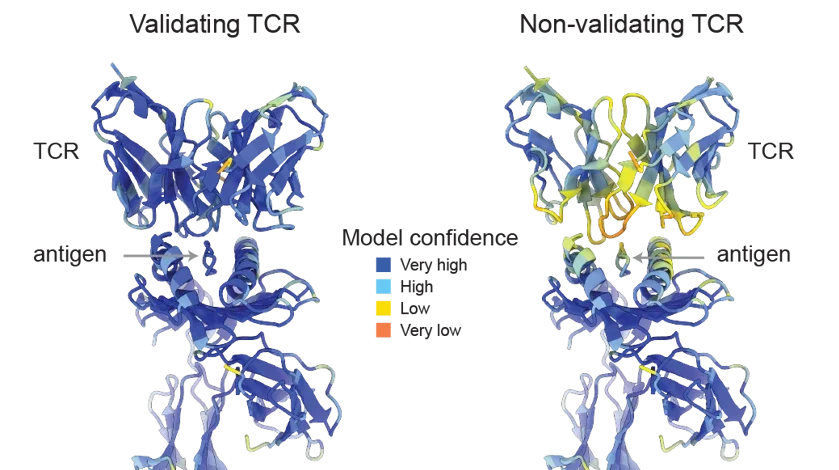
AI model AlphaFold3 long performed poorly at predicting T-cell responses. Researchers at the NKI and the Oncode Institute show that the problem lay in the data, and that the model performs much better with validated data.
Researchers at the Netherlands Cancer Institute (NKI) and the Oncode Institute have discovered why AI has so far fallen short in predicting antigens: it is the data, not the models. The results were published in the scientific journal Immunity.
Antigens are protein fragments that help T cells recognize which cells are diseased. The team of group leader Ton Schumacher doubted the data used to evaluate AlphaFold3. The researchers therefore used their own technology to create thousands of T-cell receptors and tested them for reactivity against known viral antigens, resulting in a validated dataset. According to first author Marius Messemaker, around half of the data in the widely used database VDJdb, which contains data from roughly 200 laboratories, turned out to be incorrect.
With the validated data, AlphaFold3 was able to distinguish, in about three quarters of cases, which T-cell receptors recognize viral antigens and which do not. The model also managed to select receptors that recognize patient-specific cancer antigens in a melanoma patient, without having seen those antigens during training.
Schumacher is cautiously optimistic. Predicting T-cell reactivity from genetic sequence information alone appears feasible, but major steps are still needed. “We still have major steps to make, but it’s an important step towards personalized therapies.” In the longer term, a patient’s T-cell response could be read directly from a routine tumor biopsy or blood sample.
The research was co-funded by KWF Dutch Cancer Society, the AVL Foundation and the MATCHMAKERS team within Cancer Grand Challenges.
Read also