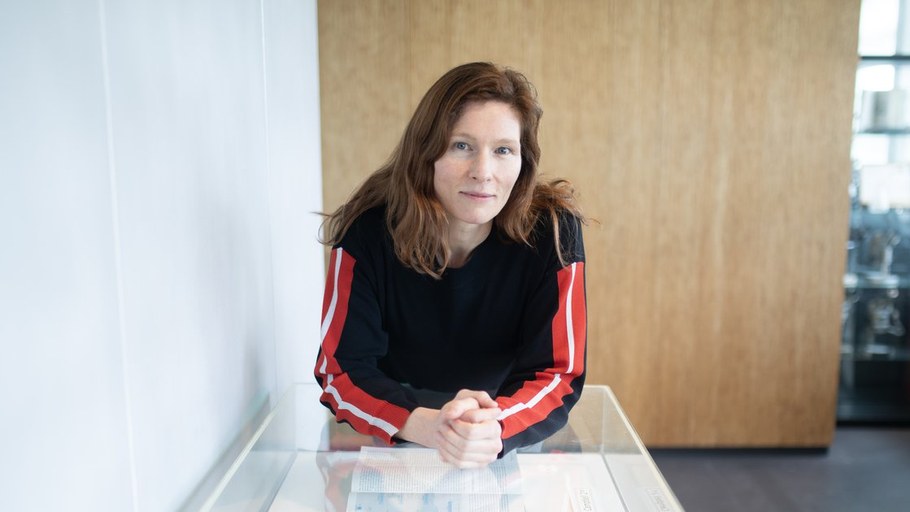
Utrecht University has appointed Laura Hollink as Professor of Responsible AI in Culture and Media. Her chair focuses on uncovering bias in AI systems such as recommendation algorithms, and on the development of inclusive AI at organisations in the culture and media sector. Hollink will combine this role with her position as a researcher at Centrum Wiskunde & Informatica (CWI) in Amsterdam.
The rapid development of artificial intelligence is raising fundamental questions in the culture and media sector. Recommendation systems, personalisation tools and decision-support applications are being adopted at increasing speed, but organisations are asking whether these applications align with the values they consider important. Hollink points to concrete concerns: AI systems can amplify existing prejudices, privacy safeguards are sometimes absent, and human oversight is diminishing. Diversity and inclusion are important pillars within the cultural sector, yet the technology does not always reflect these priorities sufficiently.
As an example, Hollink refers to recommendation systems used in public libraries. Authors who receive many clicks become more visible to the public, a well-known phenomenon called popularity bias. Research found that this reduces the cultural diversity of recommendations, which runs counter to the mission of libraries. News media also use AI for tasks such as writing headlines, summaries and short descriptions. According to Hollink, even these seemingly minor tasks can carry systematic bias, for instance in how people with a queer identity are portrayed.
The focus of the chair is less on countering bias than on making it visible. Hollink aims to identify where bias occurs in the chain: in the dataset, the algorithmic model or the interface presented to the user. The definition of diversity itself also plays a role in this work. For a book recommendation system, diversity could relate to authors, topics or the representation of minority groups, and earlier research showed that stakeholders within the sector consistently gave different answers when asked what they meant by the term.
Together with doctoral students, Hollink will investigate how hidden biases in language models can be detected and analysed. Research datasets will be compiled to enable large-scale, systematic analysis of bias in text generated by language models. The combination of her professorship in Utrecht with her role at CWI is expected to contribute to education and collaboration within a broader network. Hollink highlighted that Utrecht University treats societal impact as a genuine part of research rather than an afterthought, which aligns with her view that research should make a meaningful difference in society.
Read also