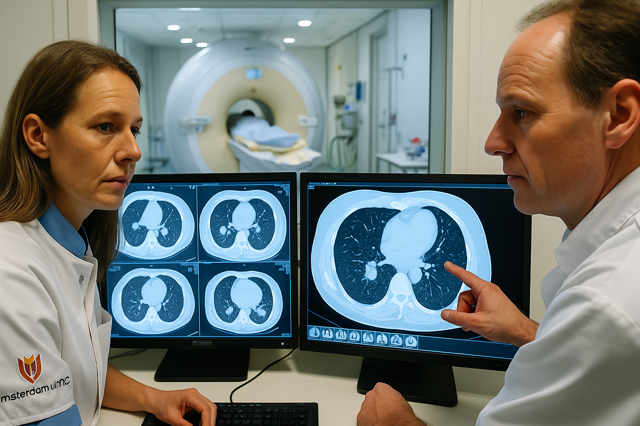
Treating breast cancer is often complex and intensive. Many patients receive neoadjuvant therapy, such as chemotherapy or hormone therapy, to shrink the tumor before surgery. However, not every patient responds well to these treatments, leading to unnecessary side effects. To address this challenge, researchers at the Netherlands Cancer Institute (NKI) have developed an AI model that helps doctors better predict therapy effectiveness.
In a study published in Nature Communications, a team led by radiologist Ritse Mann introduced the Multi-Modal Response Prediction (MRP) model. The system analyzed data from over 2,400 breast cancer patients treated at NKI between 2004 and 2020. Unlike traditional AI models that rely on a single data type, MRP integrates radiological images, tumor cell information, and clinical data.
“Our MRP system shows that it’s possible to predict which patients are likely to respond well to neoadjuvant therapy even before treatment begins,” said researcher Yuan Gao. “This provides valuable insights for personalized treatment strategies.”
What makes the model unique is its transparency: MRP explains how each prediction is formed, making its results more reliable and interpretable for clinicians. The system can be applied before, during, and after treatment to support decision-making and adjust therapies when needed.
According to Ritse Mann, the long-term goal is to automate multidisciplinary evaluations. “By combining different types of medical data and time points, we can enable faster and more accurate assessments,” he said.
This research represents a major step toward personalized breast cancer care. By combining medical data with AI-based analysis, MRP not only supports more effective treatment decisions but also contributes to improving patients’ quality of life.