
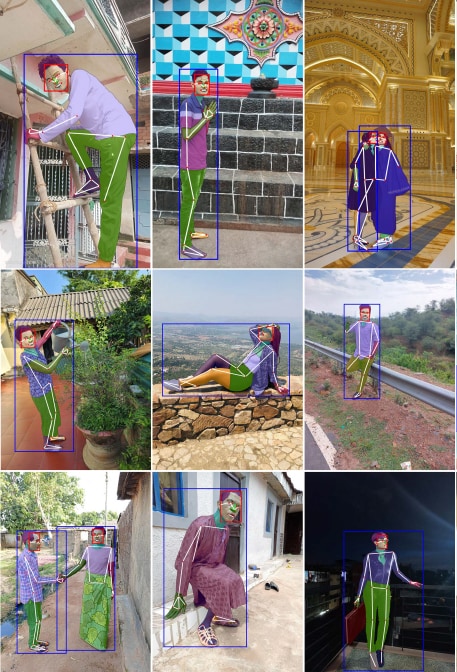
An international research group has created a new, representative photo dataset to examine how fairly AI systems recognise and label people. The collection offers insight into how modern models perform when faced with human diversity.
Concerns about discriminatory algorithms have persisted for years, fuelled by cases in which AI mislabeled or stereotyped individuals. One well-known example from 2015 involved a photo app that classified a Black couple as gorillas, sparking widespread criticism. Later studies found that some facial recognition systems struggled to classify certain demographic groups accurately, particularly Black women, who were misidentified in up to 35 percent of cases.
Sony AI set out to determine whether such issues still persist in 2025. The team developed a dataset of more than ten thousand images depicting nearly two thousand people from 81 countries and regions. All participants gave consent to be photographed, addressing a long-standing ethical concern. The descriptors attached to each image, such as posture, skin tone and expression, were provided by the individuals themselves, reducing the risk of external bias.
Several AI systems were tested on person identification, facial expressions and body posture. The models generally performed well across different ages, genders and skin tones. According to Theo Gevers, professor of computer vision at the University of Amsterdam, detection accuracy primarily depends on shapes and contrast within an image. Factors such as poor lighting or partially obscured faces influence performance more strongly than ethnicity.
Despite its scope, the dataset has limitations. Some groups, including Angolans, Filipinos and Indians, are more heavily represented than others. Sony AI stresses that the collection is intended for evaluating bias rather than training new models. Gevers considers it a step in the right direction, though challenges around diversity in AI training data remain significant.