
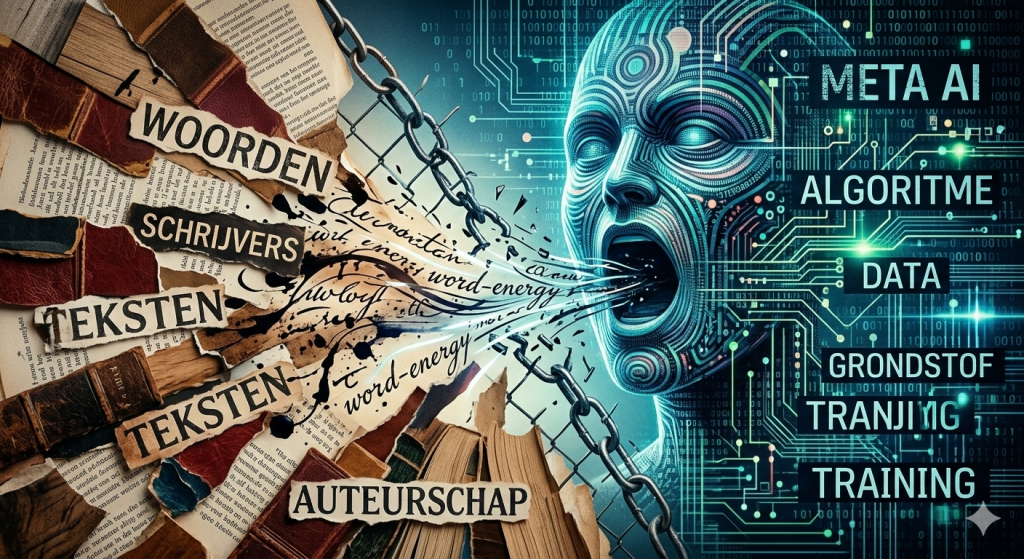
A coalition of Dutch authors, translators, and journalists is calling on Meta to immediately stop using their copyrighted texts to train AI models such as Llama. The Auteursbond, the Dutch Association of Journalists (NVJ), and Stichting Lira state that their work is essential for AI systems but that they receive no compensation.
Meta reportedly used large amounts of copyrighted material from illegal datasets such as Library Genesis (LibGen) to train Llama. LibGen provides millions of freely downloadable books and scientific articles without permission from publishers or authors, including Dutch works. The advocacy groups argue this practice violates copyright law and undermines the economic and creative position of writers, translators, and journalists.
Liesbet van Zoonen, chair of the Auteursbond, stresses that authors are not opposed to language models but that the AI industry, now a multibillion-dollar business, is illegally exploiting their work. She calls authors’ work “not free raw material” and demands fair compensation. Thomas Bruning, secretary of the NVJ, similarly calls for Meta to stop using illegal sources and to provide a fair remuneration framework for Europe.
Internationally, AI companies including Meta, OpenAI, and Anthropic face growing scrutiny for using copyrighted material in model training. In the US, a court ruled that Meta’s use of LibGen fell under ‘fair use,’ reasoning that AI models learn statistical patterns rather than reproduce texts verbatim. Other companies, such as Anthropic, settled disputes after manually scanning physical books for training.
The Dutch authors are seeking both a halt to the use of their texts and a proper compensation and transparency framework. This action highlights the increasing debate over intellectual property and remuneration in the rapidly growing AI industry.