
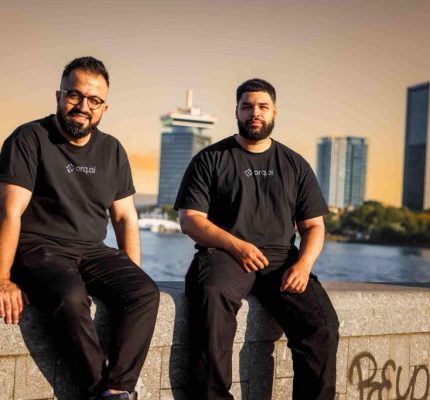
Amsterdam-based AI company Orq.ai has launched its LLM router as a standalone product. Previously available only within its broader platform, the router can now be deployed independently as a central gateway for managing multiple large language models. The release responds to rising AI infrastructure costs, increasing model complexity and growing concerns about digital sovereignty in Europe.
Organisations working with generative AI often rely on multiple models and model versions simultaneously. According to co-founder Sohrab Hosseini, this frequently results in fragmented integrations, unpredictable costs and limited transparency. Orq.ai’s router functions as a central coordination layer that manages all model traffic.
At the routing level, applications can switch between models based on cost, performance or other criteria. Orq.ai estimates that dynamic routing can reduce costs by ten to fifty percent. The system also enables token budget allocation per user or team and centralised access control.
Model selection typically involves balancing quality, performance and cost. The router automates this trade-off by dynamically assigning requests to the most suitable model. Organisations can define policies based on geographic origin, latency requirements or internal governance rules. Requests can be distributed across multiple models, and API key management is centralised.
One of the early larger customers using the router is Amsterdam-based neobank bunq.
The product launch comes amid heightened geopolitical attention to digital sovereignty. According to Hosseini, organisations are increasingly concerned with non-functional requirements such as where inference runs, who controls the infrastructure and how quickly systems can adapt to geopolitical shifts. Orq.ai positions the router as the technical enforcement point for these infrastructure decisions.
The software can be deployed entirely within a client’s own infrastructure, including support for private and air-gapped models, distinguishing it from cloud-first alternatives.
In addition to the router, Orq.ai offers its AI Studio, supporting the full lifecycle management of AI products from experimentation and evaluation to deployment and optimisation. The company is also developing an Agent Control Tower, internally referred to as Agent Resource Management (ARM), designed to monitor and manage AI agents within organisations.