
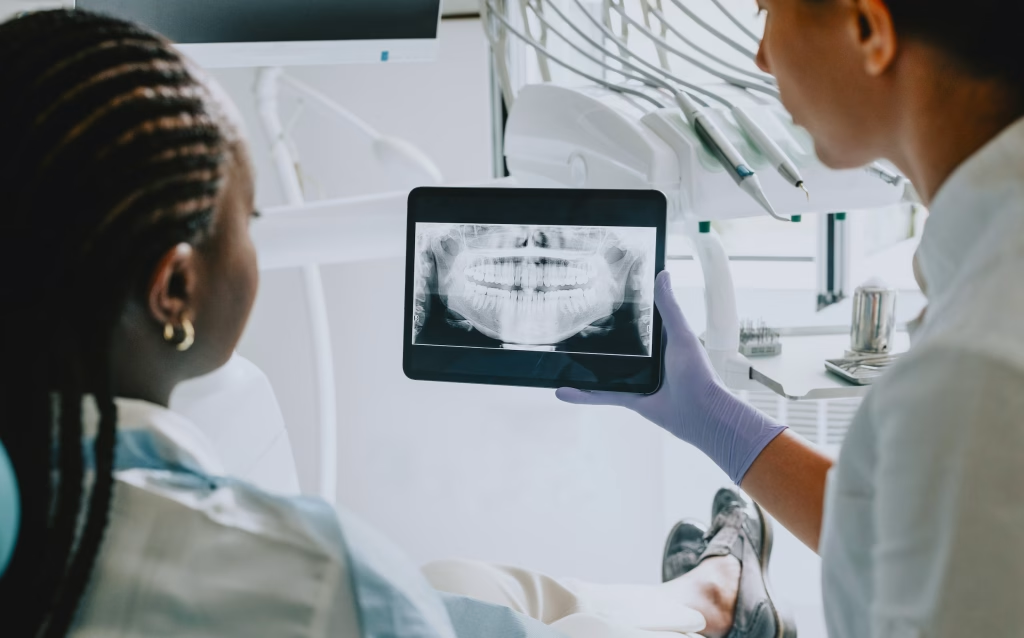
AI is increasingly used in dental practices, for example to analyse X-rays or design crowns and braces. An article in Het Parool shows that while these technologies offer opportunities for better and more preventive care, they also carry risks if professionals rely on them too heavily.
More and more dentists are using AI to assess dental health and support treatment planning. AI software can analyse X-rays within seconds and sometimes detect early signs of cavities before a human dentist would. This can lead to faster diagnoses and more preventive interventions, according to a report by Het Parool.
Dentists who work with AI say the technology is particularly useful for routine tasks and for comparing current and historical images. This saves time and allows patients to be treated more efficiently. AI is also increasingly used to design crowns, bridges and other dental devices, streamlining parts of the treatment process.
At the same time, experts caution against overreliance on AI. The technology excels at recognising common patterns it has been trained on, but may miss rare conditions or complex cases. Dentists remain fully responsible for treatment decisions, and excessive trust in AI systems can result in incorrect interventions, for example in orthodontics where treatments may be proposed largely on automated analysis.
Researchers emphasise that AI should be seen as a supportive tool rather than a replacement for professionals. It can help raise overall care quality and reduce variation between practitioners, but it cannot substitute clinical judgement, experience or the human interaction between dentist and patient. From an Amsterdam AI perspective, this example illustrates how AI is increasingly shaping healthcare practice, while reinforcing the need for responsible use and human oversight.