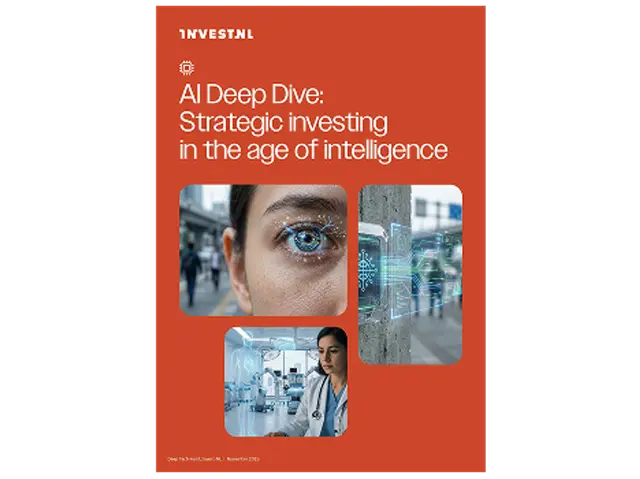
A new study published by Invest-NL and ROM-Nederland concludes that the Netherlands should not compete in the global race for ever-larger language models. Instead, the country is well positioned in domains defined by high-quality data, energy-efficient technology and specialised infrastructure. The report highlights that strategic investment and a clear AI-industrial policy are needed to strengthen this position.
The deepdive, authored by AI expert Stefan Leijnen, examines how global AI development is shifting toward energy-efficient hardware, emerging datastreams and applications tied to physical processes such as robotics, sensor systems and industrial automation. According to the report, the next generation of AI is moving away from ever-larger models and toward systems that learn locally, operate efficiently and respect privacy. These are precisely the areas in which the Netherlands can distinguish itself internationally.
The study shows that the Netherlands holds a strong position in sectors where physical processes and high-quality data align, including agritech, logistics, high-tech manufacturing, energy and healthcare. These domains give rise to AI applications that are difficult to replicate and are deeply integrated in the physical world. This aligns with the insights shared in the accompanying LinkedIn summary, which stresses that Dutch strengths lie in data quality, energy-efficient technologies and trustworthy infrastructure.
However, the report also notes that fragmentation, limited scale and insufficient access to capital hinder further growth. Invest-NL and ROM-Nederland therefore call for a stronger AI-industry strategy, including larger investment tickets for deeptech companies, stronger European collaboration and the use of public demand to accelerate adoption in healthcare, energy, research and safety. The study also proposes exploring a future “AI gigafactory” for energy-efficient edge AI and photonic hardware as a strategic foundation for European technological capacity.
For Amsterdam AI, the findings resonate with ongoing regional efforts to advance responsible AI, energy-efficient computing and trustworthy digital infrastructure. The emphasis on a European, human-centred AI trajectory aligns with Amsterdam AI’s commitment to technological autonomy and public-value-driven innovation.