Around 40 million people worldwide live with severe blindness, with no effective treatment available when the retina or optic nerve is irreparably damaged. Amsterdam-based medtech company Phosphoenix is developing a brain implant that uses AI to restore functional vision, and has now raised €1.3 million to accelerate preparations for its first study in humans.
The funding round combines continued support from existing investors, including TTT Medtech Fund, FIRST Fund and Innovatiefonds Noord-Holland, with a new investment from ROM InWest. The capital supports accelerated preparations for the First-in-Human study in 2027 and further development of the neurostimulation system, while Phosphoenix simultaneously prepares a Series A round of around €20 million to fund its clinical development programme.
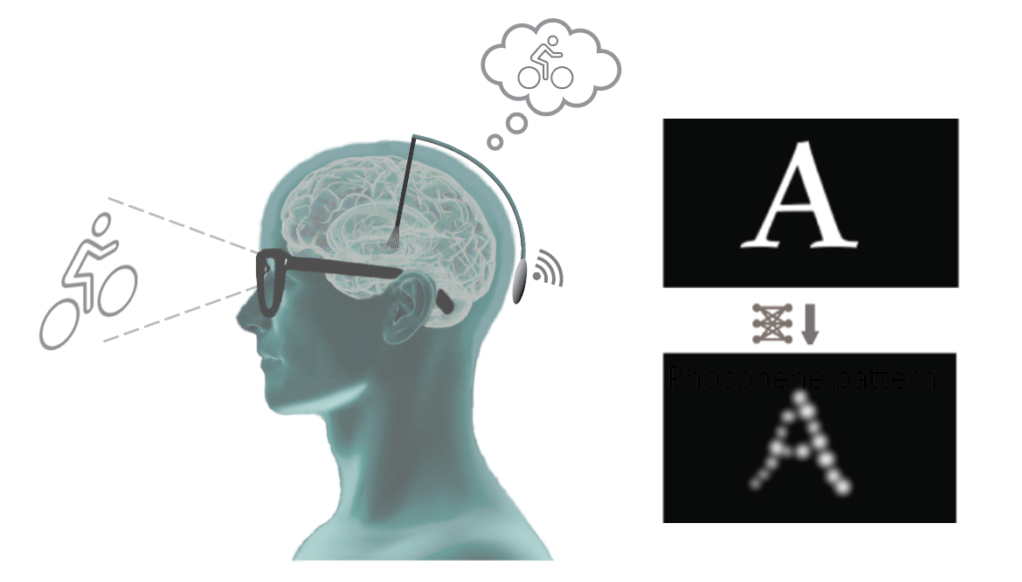
At the core of the technology is the Fountain Probe, an implant that sends electrical signals through more than 1,000 micro-electrodes to a visual area of the brain, the lateral geniculate nucleus. This bypasses the damaged eye and activates the brain directly, generating phosphenes: light perceptions that together form an artificial form of vision.
Investment manager Sara Schaafsma of ROM InWest calls Phosphoenix, rooted in Amsterdam through the Netherlands Institute for Neuroscience, an example of how scientific innovation from the region can lead to societal impact, and expects the technology to give people with severe blindness greater independence.