
Programme
AI020 2026
Keynotes
Learn from the experts

Building a company on the Cusp of AI and Science
At the Dutch AI Award 2026 ceremony, one remark captured the mood perfectly: “The Netherlands need more Max Wellings” It was a fitting summary of why UvA professor Max Welling received the award. The jury praised his rare combination of scientific impact, European leadership and entrepreneurship. Welling is professor and research chair in machine learning at the University of Amsterdam, Merkin Distinguished Visiting Professor at Caltech, co-founder and CTO of CuspAI, and a member or fellow of the Royal Netherlands Academy of Arts and Sciences, CIFAR and ELLIS, which he also helped found.
His career connects frontier research and real-world application at an exceptional level. After completing a PhD in theoretical high-energy physics under Nobel laureate Gerard ’t Hooft, he moved into machine learning, holding postdoctoral positions at Caltech and later under Geoffrey Hinton at UCL and the University of Toronto. His previous roles also include Partner and VP at Microsoft Research, VP at Qualcomm Technologies, and professor at UC Irvine.
Welling has also left a major mark on the international AI field through roles at NeurIPS, AISTATS, ECCV and MIDL, alongside honours including the ECCV Koenderink Prize, the ICML Test of Time Award, the ICLR Test of Time Award, and the ELIAS Alliance Science-Entrepreneur Award. At AI020, he will speak on “Building a Company on the Cusp of AI and Science”, exploring how AI and science together can unlock breakthroughs in materials design, climate, energy and health, and what it takes to build a competitive European startup rooted in strong values.

Artificial Intelligence, Natural Stupidity: Why the Clinic Is a Graveyard for AI Solutions
I’ll walk you through the greatest‑hits AI graveyard such as IBM Watson and the large parade of sepsis prediction models that worked beautifully in retrospect and research but failed in real time. We’ll see why every new AI still assumes clinicians have infinite time and zero cognitive load, and why “pilotitis” appears the only reliably diagnosed disease in digital health – because we keep repeating the same mistakes.
But after 70 years of failures, we should have learned by now that natural stupidity doesn’t have to beat artificial intelligence. Have we finally learned enough from our autopsies to keep the AI patient alive?
Henk Marquering is Professor of Translational AI at Amsterdam UMC, with joint appointments in Biomedical Engineering & Physics and Radiology & Nuclear Medicine departments. He holds a PhD in theoretical seismology from Utrecht University. After a stint at Océ and several startups, he moved into cardiovascular image analysis, eventually realising his work was at the core of artificial intelligence. For over a decade, he has focused on AI for stroke care, developing solutions for automated image analysis and ambulance‑based EEG triage – innovations that reached clinical practice via two spin‑outs: Nicolab and TrianecT. More recently, his research expanded into digital twins and in‑silico medicine, leading to a third spin‑out, inSteps. He has co‑authored over 300 papers and supervised more than 60 PhD students.
What tomorrow will ask of AI today
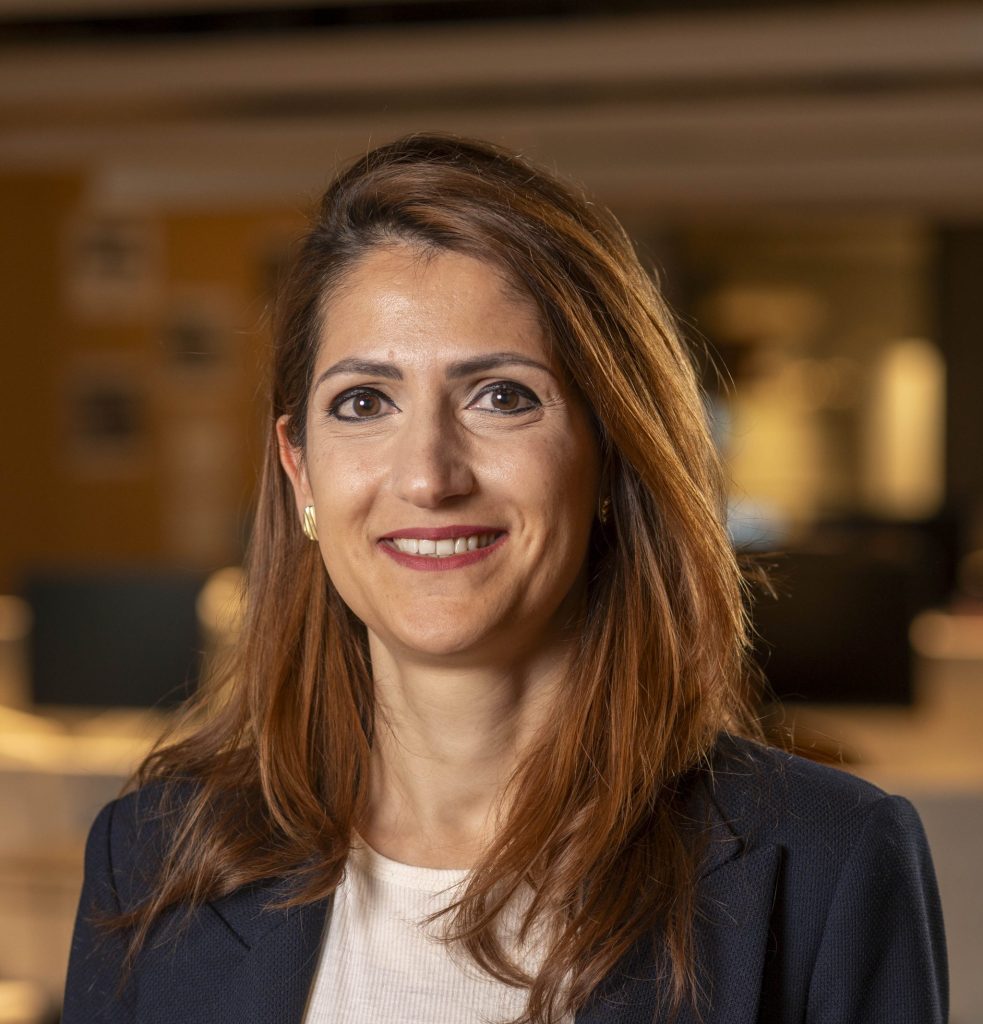
Mona de Boer is Partner AI & Data and Responsible AI Leader at PwC, where she operates at the intersection of technology, governance and organizational transformation. In her role, she focuses on how organizations can translate advances in AI and generative AI into tangible business value, while ensuring these systems are developed and deployed in a responsible, secure and compliant way.
In her keynote, Mona de Boer takes a back-to-the-future perspective on the AI transition organisations are now entering. As AI moves beyond isolated applications and starts reshaping processes, decision-making and value creation, questions around trust and responsible use are becoming central rather than secondary. By looking ten or twenty years ahead and then back at the present moment, she will reflect on what organisations may wish they had understood earlier about embedding trust, responsibility and long-term thinking into the design and application of AI.
13:50 - 14:20

Jelle Prins
Co-founder of Cradle and initiator of the National AI Delta Plan
An AI plan that works for the Netherlands
Jelle Prins is one of the entrepreneurs helping push the Dutch AI debate forward, both technologically and strategically. As co-founder of Cradle, he is building an AI platform for protein design, with applications in medicine, chemicals, food and advanced materials. At the same time, he is one of the driving forces behind the National AI Delta Plan, presented in late 2025 as a roadmap for a future-proof, democratically grounded AI strategy for the Netherlands, focused on AI talent, compute capacity, adoption and public value.
Prins began his career as Uber’s first designer and product manager, working on the original apps for drivers and passengers. Through his own company, he later helped build the first apps for companies including Booking.com and Catawiki, before Uber acquired the business and brought him back into a leading role in product design and international team development. In 2020, he was asked by the Dutch government to lead the development of the CoronaMelder contact-tracing app. Through Cradle and the AI Delta Plan, Prins brings together startup building, product design and strategic AI policy, with a clear focus on how the Netherlands can build AI that is both competitive and aligned with its public values.

Building AI Platforms for Post-Training and LLM Deployment
Mashrur Haider is currently leading Post-training Product at Nebius, Token Factory where he focuses on building and refining AI platform capabilities that help teams post-train, and deploy large language models in production. He works closely with engineering and product teams to translate complex ML workflows into practical dev tools and experiences.
Nebius is the AI cloud company, delivering a unified platform that spans the complete AI journey — from data and model training and tuning to production runtime and deployment. Founded around deep in-house technological expertise, Nebius brings a strong engineering culture rooted in designing and operating large-scale platforms that run reliably at global scale. The company serves AI builders and enterprises worldwide across industries including healthcare and life sciences, robotics and physical AI, financial services, media & entertainment, retail and many others.
16:30 - 17:00


Onur Can Koltukcu & Marleen Stikker
Head of Responsible AI at AIC4NL & Founder of Waag Futurelab
Whose AI Is It Anyway?
AI might feel universal, but the data behind it isn’t. So who actually owns the foundation of AI, and who gets to shape what comes next? As global models race ahead, this closing conversation with Marleen Stikker and Onur Can Koltukcu dives into the role of data, ownership and control in shaping the next wave of AI. Is it still worth building our own models? And if so, what does it take to make them matter? A sharp, forward-looking session about public AI and the global commons, to end the day and start the next phase.
Onur Can Koltukcu is Policy Officer FinTech & AI at De Nederlandsche Bank, working at the intersection of AI regulation, innovation and financial stability. He will be joined by Marleen Stikker, founder and executive director of Waag Futurelab. Waag Futurelab reinforces critical reflection on technology, develops technological and social design skills, and encourages social innovation.
Workshops
Be inspired at AI020 by workshops that reveal how AI is already reshaping the world around us. From smart applications to fresh ideas and unexpected perspectives, this is where innovation becomes tangible.

PwC: Secure AI Transformation

AISA x AI020 USA & China Superintelligence Governance Simulation

Setting Up For Succes

RAAIT Toolbox for Responsible AI in Practice

The Role of Students in Building the Future of Dutch Tech

Legal & Tech: Europe Tour of Opportunities

How to use AI applications in tech, and what AI means for Q42 as a software agency
PwC: Building AI workers block by block

Designing Dark Tech
Digital Cardiology and AI at Amsterdam UMC: how to build a AI-ready infrastructure
Hackathon

AI Sovereignty

Amsterdam Economic Board & Port of Amsterdam
Workshops
Be inspired at AI020 by workshops that reveal how AI is already reshaping the world around us. From smart applications to fresh ideas and unexpected perspectives, this is where innovation becomes tangible.
Workshops
10:55 – 11:35
Secure AI Transformation by PwC
PwC helps organizations turn AI and generative AI into real business value. By combining deep industry expertise with a strong focus on Responsible AI, PwC supports clients in improving productivity, redesigning work, and scaling AI in a way that is secure, compliant, and human-led. Through its open ecosystem approach and broad technology alliances, PwC helps build trusted AI solutions that deliver impact in practice.
RAAIT Toolbox
By Saskia Robben and Sophie Horsman
You are a (future) developer, designer, researcher, product owner, data officer, CEO… and you want to use AI responsibly. There’s a jungle of tools out there promising to help, but how do you choose? In this session, we’ll briefly introduce the RAAIT Toolbox for Responsible AI, after which you’ll get hands-on with a real-world challenge. The toolbox offers practical support for organizations that want to understand, design, develop, and deploy AI in a way that strengthens people, society, and the planet. It helps ensure that ethical, societal, and sustainable principles are not just acknowledged, but actually applied in practice. The toolbox is being developed within the RAAIT program (Responsible Applied Artificial Intelligence), in collaboration with a broad network of universities of applied sciences, companies, and public organizations.
Digital Cardiology and AI at Amsterdam UMC: how to build an AI-ready infrastructure
By Fleur Tjong and Stephan van der Zwaard
This workshop highlights how Amsterdam UMC is working towards an AI-ready infrastructure for cardiovascular care. We will discuss the key building blocks needed to support meaningful AI implementation, including data integration, governance, validation, and embedding within clinical workflows. Drawing on examples from digital cardiology, the session will focus on how to move from promising models to sustainable real-world use.
FULL: Designing Dark Tech (Ongoing workshop, covers Slot 1 & 2)
By Marise van Noordenne & Jolijn Friedrichs
What happens when we stop developing solutions and start designing the systems we fear? In this hands-on workshop, participants explore the shadow sides of emerging technologies by creating provocatypes: speculative and critical prototypes that reveal ethical tensions, systemic bias, and unintended consequences. Using The Speculation Game—a tool developed by the facilitators—participants work with thematic Dark Tech cards (such as personas, technologies, and revenue models) to design fictional systems that surface hidden assumptions and power structures. These speculative scenarios spark critical discussion about how technology shapes, and is shaped by, society.
PLEASE NOTE: THIS WORKSHOP IS FULL
Workshops
11:40 – 12:20
Port of Amsterdam & Amsterdam Economic Board
A joint workshop by Amsterdam Economic Board and Port of Amsterdam, bringing together students to tackle real-world challenges in the port. The session starts with an introduction by Port of Amsterdam, followed by three hands-on challenges focused on AI, circularity, and innovation. Students work in teams to develop solutions and conclude with short pitches presenting their ideas.
How to use AI applications in tech, and what AI means for Q42 as a software agency
Q42 shapes, ships, and scales digital products that make people’s lives smarter, better and more fun.
ROM InWest: Setting Up For Success
By Jorn Eiting-van Liempt
The journey of a founder seems to be very curving, exciting and at times even scary. But there is a way to set it up in such a way that you remain control and with a roadmap that will increase your chances for success. In this session we will describe the pathway and how you can set your business up for success.
FULL: Designing Dark Tech (Ongoing workshop, covers Slot 1 & 2)
By Marise van Noordenne & Jolijn Friedrichs
What happens when we stop developing solutions and start designing the systems we fear? In this hands-on workshop, participants explore the shadow sides of emerging technologies by creating provocatypes: speculative and critical prototypes that reveal ethical tensions, systemic bias, and unintended consequences. Using The Speculation Game—a tool developed by the facilitators—participants work with thematic Dark Tech cards (such as personas, technologies, and revenue models) to design fictional systems that surface hidden assumptions and power structures. These speculative scenarios spark critical discussion about how technology shapes, and is shaped by, society.
PLEASE NOTE: THIS WORKSHOP IS FULL
Workshops
14:30 – 15:10
NAICE: AI Sovereignty
By Washant van Dam & Martin Kartomo
AI sovereignty is not a distant goal, it is today’s reality. In this hands-on workshop, decision-makers, policymakers, and developers work on the four enablers that make AI Sovereignty actually work: your data, your technology and methods, your talent and organization, and the context you operate in. Stop depending on Big Tech and leave with a concrete plan to build AI that is truly yours.
FULL: PwC: Building AI workers block by block
This workshop introduces a strategic and hands-on approach to designing and deploying AI agents as integral members of tomorrow’s workforce.
Participants will explore how agent-based AI can enhance collaboration, adaptability, and innovation across dynamic organizational environments.
PLEASE NOTE: THIS WORKSHOP IS FULL
FULL: AISO: The Role of Students in Building the Future of Big Tech
AISO explores how students can actively shape the Dutch AI ecosystem, unpacking how Amsterdam’s tech landscape is structured, where students fit in, and what opportunities exist beyond the classroom. The session highlights how students contribute through research, startups, and collaborations, and how to intentionally navigate the transition from university to industry while turning knowledge into real-world impact.
Workshops
15:15 – 15:55
Panel: AI & The Future of Work
With Quincy Dalh (City of Amsterdam), Olivier van Hees (Amsterdam Data Academy), and Frank Verduijn (UWV).
How will AI reshape the future of work? In this forward-looking panel, experts from the City of Amsterdam, Amsterdam Data Academy, and UWV explore the opportunities, risks, and long-term impact of AI on job security. From changing skill demands to workforce transformation, the discussion will dive into what AI means for careers today—and in the years ahead.
AISA x AI020 USA & China Superintelligence Governance Simulation
In this interactive workshop, participants join teams representing the USA or China and make key decisions in the race toward Artificial Superintelligence. Along the way, they must balance the interests of government, industry, and AI safety advocates, with consequences that could shape the future of the world…
BBO: Legal & Tech: Europe Tour of Opportunities
By Marcel van der Kuil
Is Regulation good OR bad for Innovation? And is Tech neutral, or maybe good AND bad? Let’s explore some key topics and trends in Europe, to address these questions together, from the Tech and the Legal perspective. For this, the Socratic method, in order to give it all a proper European flavor
EXTRA: PwC: Building AI workers block by block
This workshop introduces a strategic and hands-on approach to designing and deploying AI agents as integral members of tomorrow’s workforce.
Participants will explore how agent-based AI can enhance collaboration, adaptability, and innovation across dynamic organizational environments.
Hackathon
10:55 – 15:55
AISO Hackathon
𝗣𝘂𝗯𝗹𝗶𝗰 𝗶𝗻𝗳𝗼𝗿𝗺𝗮𝘁𝗶𝗼𝗻 𝗶𝘀𝗻’𝘁 𝘁𝗵𝗲 𝘀𝗮𝗺𝗲 𝗮𝘀 𝗮𝗰𝗰𝗲𝘀𝘀𝗶𝗯𝗹𝗲 𝗶𝗻𝗳𝗼𝗿𝗺𝗮𝘁𝗶𝗼𝗻.
Every week, Amsterdam’s city council publishes minutes from sessions that run 3 to 5 hours, written in formal Dutch. They’re technically open to anyone. In practice, 𝗮𝗹𝗺𝗼𝘀𝘁 𝗻𝗼 𝗼𝗻𝗲 𝗿𝗲𝗮𝗱𝘀 𝘁𝗵𝗲𝗺.
16 participants will have one session to build something that changes that. Input a transcript or PDF, extract decisions, votes, and what it actually means for residents.
𝗦𝗺𝗮𝗹𝗹 𝘀𝗰𝗼𝗽𝗲. 𝗥𝗲𝗮𝗹 𝗽𝗿𝗼𝗯𝗹𝗲𝗺. 𝗖𝗼𝗻𝗰𝗿𝗲𝘁𝗲 𝗼𝘂𝘁𝗽𝘂𝘁.
Spots are limited and require additional registration. Please register here.
Startup pitches
Startup pitches
10:55 – 11:35
Naice
Naice is an Amsterdam-based AI consultancy that helps organisations build reliable, production-ready AI systems. Rather than chasing trends, the team focuses on strategic architecture, long-term durability, and responsible deployment, including sovereign AI infrastructure. Their approach combines scientific rigour with practical business judgment.
RankMyAi
RankMyAI is a non-profit platform that ranks AI tools monthly based on web traffic, customer reviews, and investment data. Founded by Prof. Jesse Weltevreden and Wilco Verdoold and supported by the Centre for Market Insights at Amsterdam University of Applied Sciences, the platform helps organisations navigate the AI landscape with independent, evidence-based comparisons. It also produces specialised rankings for the Amsterdam metropolitan region.
Mindstash
Mindstash is a “second brain” application that helps users capture and rediscover information from across the web and their apps. Built on principles from neuroscience, the platform uses AI to identify connections between saved content and surfaces it again when contextually relevant. Rather than imposing folder structures, it organises knowledge the way human memory naturally works.
ZetaAlpha
Zeta Alpha is an Amsterdam-based AI company building enterprise search and knowledge discovery platforms for knowledge-intensive industries. Their system combines semantic search, RAG, and AI agents to help organisations find relevant information across large document repositories, with a proprietary European-built language model at its core. Clients include Deloitte, NASA, and O2.
OpenIris
OpenIris makes citizen participation accessible to everyone, at scale. The platform conducts thousands of conversations simultaneously via phone or text, in over 40 languages, giving every resident a voice regardless of language, education level, or availability. Municipalities and organisations use it for participation programmes, 24/7 multilingual information services, and outreach to labour migrants, generating structured data and automatic analysis rather than hearing only from the small percentage who show up to public meetings.
Startup pitches
11:40 – 12:20
NinA-AI
NinA AI Agency is an Amsterdam-based AI implementation studio helping organisations become more effective with AI. The team offers AI starter workshops, custom AI agent development, and N8N-based automations, as well as ongoing AI officer consultancy. Their focus is on practical, in-house adoption rather than theoretical training.
Amsterdam Data Academy
Amsterdam Data Academy is one of the leading training providers in the Netherlands for data and AI, having trained nearly 1,500 professionals since 2018. The academy offers programmes in data science, data engineering, and AI, combining online learning with live interactive sessions. Its mission is to make lifelong learning in data accessible for professionals at all levels.
Biomatch
BioMatch is an AI-powered platform that helps biotech startups discover new applications for their products and technologies. By analyzing scientific data and market trends, we identify promising alternative uses to expand your market potential. Our platform also finds and prioritizes leads within your network, connecting you with the right partners and customers for these new opportunities. We streamline innovation and business development, helping biotech companies unlock new value and accelerate growth.
Klevox
Klevox is a Netherlands-based AI consulting studio that helps European businesses implement AI from strategy through to production deployment. Founded in 2025, the company takes a full-stack approach across automation, machine learning, and AI-powered business transformation, with a strong focus on GDPR compliance, data security, and explainable AI. Their work spans SMEs and enterprises across healthcare, insurance, manufacturing, and SaaS.
EU GPT
EU GPT is a Dutch startup offering a European sovereign AI platform built for organisations that need to stay GDPR-compliant and outside the reach of US cloud law. The platform provides AI assistants with advanced search capabilities, running entirely on EU-based infrastructure powered by renewable energy. It is designed for organisations that require full data control, regulatory compliance, and enterprise-grade reliability.
Startup pitches
14:30 – 15:10
CopyRight Delta
Copyright Delta is an Amsterdam-based startup building the licensing infrastructure for AI and music. Through a single API, it connects music rights holders with AI companies and gaming platforms, allowing rights queries, track registration, and pre-cleared licensing with built-in revenue sharing. Founded in 2020 and based at LAB42 at the University of Amsterdam, the company sits at the intersection of music rights, AI, and data.
Jobrux
Jobrux is an AI-powered recruiting platform that brings together candidate sourcing, screening, interviews, and assessments in a single workflow. For employers, the platform automates CV screening, AI-driven interviews, and skill-based evaluations, with built-in anti-cheating features and integrations with LinkedIn and major job boards. For job seekers, it offers a modern way to showcase skills and complete interviews directly on the platform, making skill-based hiring accessible for startups and growing companies alike.
20 + companies attending
Our main sponsor
PwC
“At PwC, we aim to help build trust in society and solve important problems. In that context, the safe and responsible use of technologies such as AI is becoming increasingly important. We are pleased to contribute actively to that during an event like AI020.”
Attending sponsors
AIC4NL

Copyright Delta
Gemeente van Amsterdam

Klevox Context
Vrije Universiteit Amsterdam
RAAIT

Lab42

Nebius
Naice
Dark Tech Studios

AISO

Institute for Logic, Lanuague and Computation
Netherlands Cancer Institute
BBO

HumanX

Autoriteit Persoonsgegevens
Q42
University of Applied Sciences
Amsterdam UMC

Zeta Alpha
Amsterdam Economic Board

Nina AI

Sanquin

University of Amsterdam

Centrum Wiskunde & Informatica
Rom InWest
